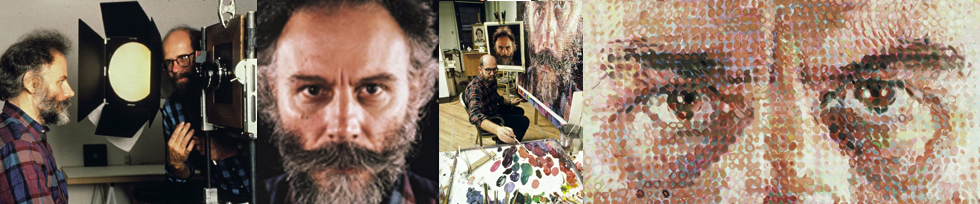
20×24 Studio bio picture
  • 20×24 Studio, the Legend Continues

    The last great photographic process of the twentieth century,  the original 20x24 Large Format Polaroid process is alive and well in New York City! 
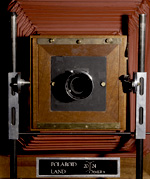
The legendary large format instant photographic process pioneered by Edwin Land and the company he founded has been rescued by a group of the film process’s aficionados.   20 x 24 Holdings Executive Director John Reuter: “We worked closely with Polaroid Corporation as it became clear that the company would exit the film business. We were able to set aside sufficient film stock and development chemistry to last many years. In addition we were able to acquire the machinery necessary to mix the reagent, package that reagent into the chemical pods and the original spooling machine to spool down the very large film rolls into ones that can fit the cameras.” The 20 x 24 Studio, relocated to Tribeca, has one of the original Polaroid Land view cameras, of which there where are only six in existence.   The studio operations are run by Jennifer Trausch, Director of Photography for 20x24 Holdings. 
 John has been involved with Polaroid 20x24 instant imaging for nearly thirty years and Jennifer for over ten. Says John, “While digital technology has made great strides in the past few years, there is still no medium that can compete with Polaroid large format instant film, this is the purest form of photography, you are taking a photograph and making a print at the same moment.     Reuter points out “many artists recognize that the tonal nuances produced by Polaroid 20x24 analog technology film are impossible to capture by digital means. Every exposure is unique, since there is no re-usable negative.  It is also ideal for portraits as no other process can equal the life like dimensionality that ultra large format instant imaging can provide. “ 
His view is echoed by some of the legendary artists who have used this process, Ansel Adams, Andy Warhol, Annie Liebowitz, William Wegman, Chuck Close, and Julian Schnabel among others. The amazing people that have been photographed with this legendary process range from Presidents to rock stars and everybody in-between.   The studio is available for daily rentals and commissioned portraits. Click here to see views of our Tribeca Studio.

    Call 212-925-1403 for an appointment or e-mail.

Jennifer Trausch: Behind the Scenes in the South

Here are some of Jennifer Trausch’s personal recollections from her days on location in the South:
“It was the hottest day of our trip and we were quite run down having driven some three thousand miles in the last couple weeks. The night before my assistant, Kim, and I had worked at a Zydeco dance hall outside of Opelousas, Louisiana. We had shot late into the night until the dancers had worn themselves out. We were covered in bug bites from loading the equipment into the truck in the pitch black near railroad tracks we had only heard signs of. The day before the truck had broken down for the second time. It is hard enough to haul around a 235 pound camera, but having to move it in and out of a broken truck was yet another test of our determination. We had to get back to New York soon, and were driving northbound in Mississippi when we saw a handwritten sign for a fair and followed it, intrigued. The fairground was so small that you could walk through it in a couple of minutes. It was the middle of the afternoon and the air was heavy and the old rides were still. The location was perfect for our way of shooting; It was small enough that we could negotiate our way around with the camera but big enough that we would have a good selection of subjects to work with. I immediately gravitated toward the dunking booth; It was a simple box of water with a splintered board to sit on. Life preservers were hanging on a fence nearby just in case. I used my digital camera to make notes, circling the booth to find the best vantage point. One could only imagine who would be sitting up there later.
Read the whole story and view location photos by Kimberlee Venable
.

Jennifer Trausch, The South

Jennifer Trausch has been Director of Photography at the 20×24 Studio since 2003. In that time she has worked with dozens of artists, both in the studio and on location. No one knows the possibilities and limitations of the medium as well as Trausch. Known primarily as an indoor studio camera that uses high powered electronic strobes as its light source, the 20×24 camera is capable of location work. It requires a very large truck, substantial support equipment to protect and stabilize the machine outdoors, but more importantly an understanding of the camera’s capabilities and even more crucial understanding of the film’s response to rapidly changing light conditions. Trausch’s experience with the camera put her in a unique position to exploit the potential of ultra large format photography on location and minimize the disasters always awaiting the inexperienced. Leaving the powerful strobe lighting behind in the studio, Trausch instead exposed with available light, often requiring long exposures, even with the more sensitive Black and White Polaroid emulsion. One must work quickly and confidently to calculate the considerable bellows extension and stay on top of ever-changing light conditions. The technical tour de force alone makes this body of work noteworthy. More impressive are the relationships Trausch develops with her subjects, making connections that few photographers attempt to make.
Here are some of Trausch’s own words describing her project; “In my current body of work shot in the American South, I chose to put the 20×24 Polaroid Camera in active and unpredictable circumstances on the road. In doing this I am filtering out all of the traditional notions of 20×24 shooting, defining my own vision for it. Having operated the camera for seven years, I am very familiar with this handmade machine and understand how colors and light render on its film.  I am one of the few people who are not intimidated by its mass, the sheer physicality of shooting on it, and its cumbersome and awkward nature in the field. I have chosen to eschew structure in favor of a looser, more intuitive approach of finding my subject. I depict the subtle progression of a subject or environment over a long exposure. During these long exposures a subject may move, the light may change and embracing these details rather than avoiding them is how my own work differs from the typical approach to the medium.”


20×24 Studio Featured Artist: Ellen Carey

One of the more unique artists working with Polaroid 20×24 technology today is Ellen Carey. Ellen first began using the 20×24 in 1982 while it was housed at the Museum of Fine Arts School in Boston. Ellen’s first work was a series of self portraits, lit with colored gels and later painted with enamel paint. These evolved into another series of self portraits made in New York that combined close up portraits lit with colored gels with intricate collages of black and white graphic images.
These multiple exposures blended the abstract and narrative in compelling complexity. In the 1990s Carey moved on to produce the series of “Pulls” and “Rollbacks”. Eliminating the figure altogether, Carey created these abstract images taking full advantage of the camera as a printmaking machine. Exploiting the roll film nature of the system, Carey produced pieces sometimes seven to ten feet in length by letting the camera run beyond its usual stopping point. At times, the positive would be cut away from the negative and “rolled back” into the camera for additional exposures and developing.

Click here to see more of Ellen’s work and excerpts from the essay “Ellen Carey, Matrix to Monumental”, by Ben Lifson.
Ellen Carey, 20×24 Pulls and Rollbacks, Part 1
Ellen Carey, 20×24 Pulls and Rollbacks, Part 2
You can see more of Ellen’s work at her website: Ellen Carey Photography

You can see more of Ben Lifson’s works and writings at: Ben Lifson

Ellen Carey, 20x24 Polaroid Pulls

Mega # 4, the 20×24 Pod Machine

Ever wonder how 20×24 pods are made? This video shows our pod machine in Putnam, CT taking the Polaroid reagent mixed at our site In Dudley, MA and loading into the individual foil packets or “pods”.

One pod is used to develop a 20×24 exposure.

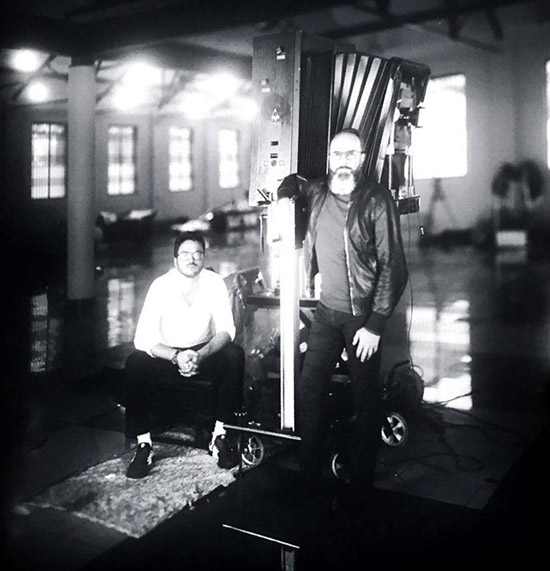
In memory of Peter Bass, Polaroid Technical Specialist for over 35 years. Peter played a pivotal role in developing the 20×24 and 40×80 formats and the cameras that used this unique Polaroid film.

Peter Bass

Photographic Historical Society of New England feature on Peter Bass