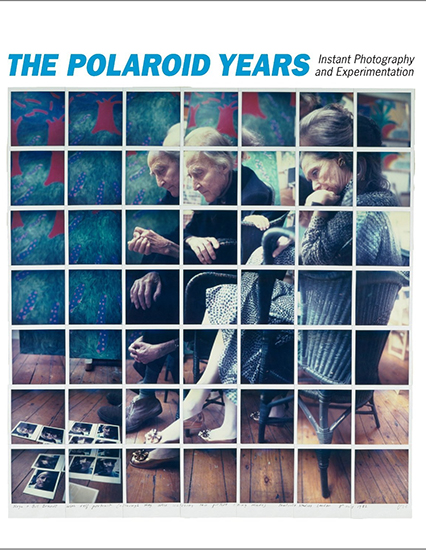
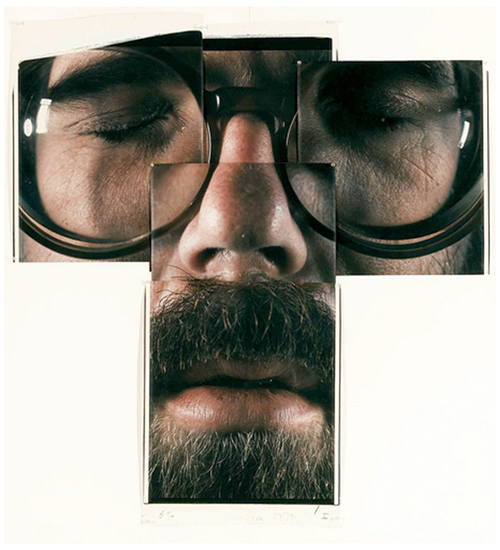
Chuck Close
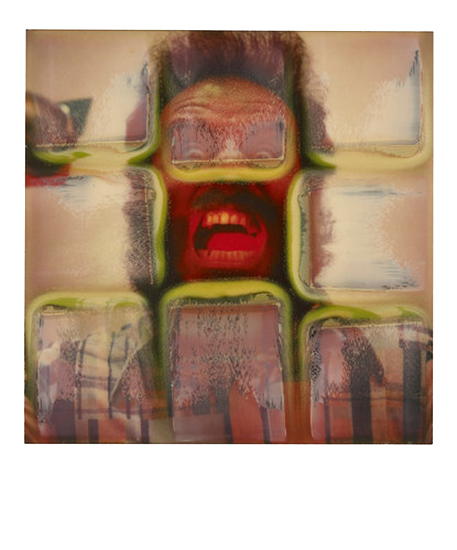
Lucas Samaras
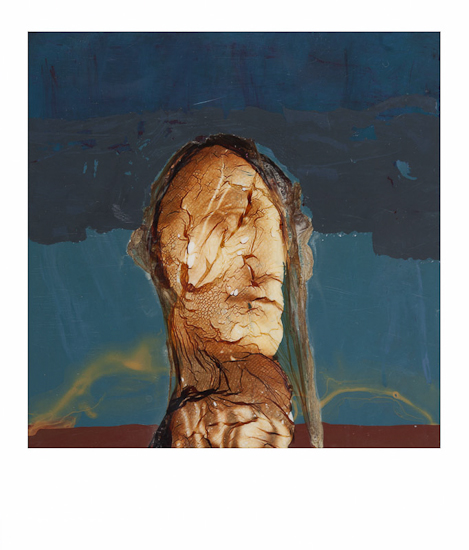
John Reuter
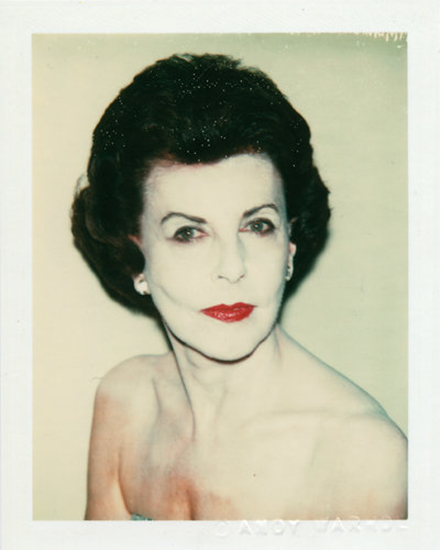
Andy Warhol
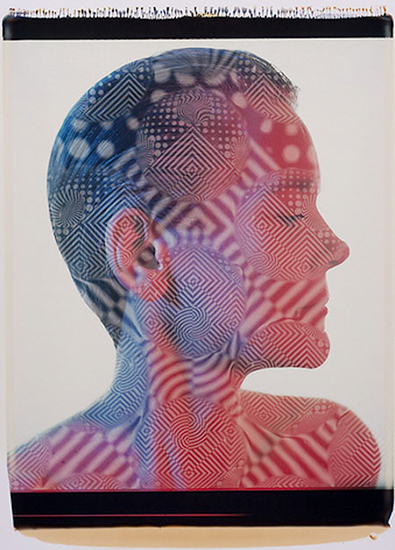
Ellen Carey
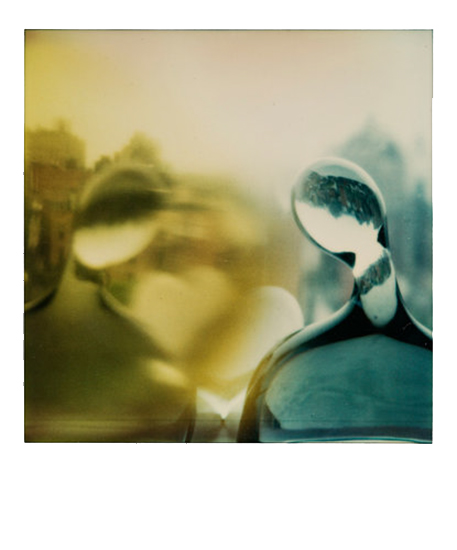
Andre Kertesz
MARY-KAY LOMBINO is the Emily Hargroves Fisher ’57 and Richard B. Fisher Curator at the Frances Lehman Loeb Art Center at Vassar College in Poughkeepsie, New York. She has curated several exhibitions including Off the Shelf: New Forms in Contemporary Artists’ Books and Utopian Mirage: Social Metaphors in Contemporary Photography.
See the review in the New York Times.
Portraits of a President
Chuck Close has wanted to photograph Barack Obama since he was a candidate in 2008. There were several chances to do that in New York these past few years but schedules seemed to change at the last minute. Finally the opportunity arose to photograph the President in Washington DC at the Jefferson Hotel. Complicating our lives was the fact that we were already booked to work with Bruce Weber for the We Are Family Foundation the night before in New York City. Normally you would want to have the camera in DC the day before, set up and test thoroughly to be ready for the few minutes we would likely have with the President. Instead, we loaded the truck up at 11:00 pm and our trusty driver Robert Pattison parked the truck in Tribeca and left for Washington at 4:00 am. We followed on the train with Chuck that next morning, arriving at the Jefferson at 11:30 a.m. Robert had already brought in the equipment at 10:00 a.m. for the Secret Service security sweep.
We got up into the room around noon and began to unpack our equipment in the 20×20 foot room provided us. A 20×20 foot space is about the bare minimum to pull off a 20×24 shoot. We need distance from the seamless and we also need additional room for Chuck’s motorized wheel chair to fit behind the camera. Fortunately, we also had another room across the hall where we could put any non-essential equipment out of the way. We set up and tested for two hours before we asked Chuck to come up for further testing. The President arrived exactly on time at 4:00 pm. He was gracious, friendly and quite curious about our large camera with the red bellows. He was a dream to work with, hitting his mark every time, never moving while we focused and generously gave us forty five minutes to get our images, six in color and three in black and white.
The end product here will be digital watercolors from the select color image and a large-scale tapestry from the black and white image. David Adamson of Adamson Editions in Washington DC will print the watercolor editions and Donald Farnsworth of Magnolia Editions in Oakland will create the tapestries. For a closer look at the tapestry process, click here. The day after the shoot we brought the images to David Adamson to be scanned in preparation for the digital watercolors and tapestries. Lyle Ashton Harris, a long time 20×24 artist was in residence at Adamson Editions preparing work for a new show.

Barbara Kasten 20×24 Constructs

and sharp edges. Kasten continued her series when the camera moved to the School of the Boston Museum of Fine Arts in 1983 and also the New York Studio in 1986. The images are unique to the camera, taking advantage of the deep space depth of field by shooting at an aperture of f64. the lighting was complex as well, with multiple point sources covered with colored gels. Each color required a different exposure, and due to the close down aperture, some colors needed to be fired up to twenty times. Each exposure was a symphony of multiple colors, each fired according to density. White light might require one exposure, yellow two, red four, green ten and deep blue the most, sometimes up to twenty. The instant feedback was critical here, one could never prejudge how strongly a color would render as it bounced off objects and through silk scrims. The end result was a dazzling combination of abstraction and lush color.
Here is an excerpt of a review of Barbara Kasten’s work from an exhibit at Kadel Willborn in June of 2011 posted on art news.org
BARBARA KASTEN
A matter of perspective
15 May 2011 – 26 June 2011
The works in the current exhibition, A matter of perspective, belong to the “Construct Series” created in the late 1970s and early 1980s. Barbara Kasten built space-filling, abstract installations in her studio made of light as well as colour surfaces reflecting mirrors and metal elements, which she then photographed with 8 x 10 inch and 20 x 24 inch mid-format Polaroids. Each photograph is therefore unique. Barbara Kasten’s Construct photographs depict a kind of constructivist “stage” that changes from photo to photo, but remains abstract and non-narrative.Although Barbara Kasten’s art-historical significance has been confirmed by her being represented in important American collections such as those of the San Francisco Museum of Modern Art and the J. Paul Getty Museum, as well as the inclusion of her works in anthologies on the history of photography, e.g., “Starburst: The History of Color Photography in the 1970’s” and “The Edge of Vision: The Rise of Abstraction in Photography”, her oeuvre has almost disappeared from present-day perception in the USA and particularly in Europe.Barbara Kasten’s working method proves to be highly relevant, both for current trends in the abstract/concrete photography of the younger generation, for example, Liz Deschenes, Eileen Quinlan, Walead Beshty, Peggy Franck or Wolfgang Tillmans, and due to its art-historical connections to early trends in abstract photography as can be found with Lázló Moholy-Nagy, Christian Schad or Man Ray.Moreover – and this is what makes Barbara Kasten’s position so exceptionally relevant – her abstract pictures are based on the real construction of expansive installations in front of the camera. Thus, in the early 1970s, she already crossed genre-specific borders between sculpture, painting and installation, something which strongly connects her work with the approach of a younger generation of artists.
WIRED On Line: Gear Behind the Career: Elsa Dorfman and the Giant Polaroid Camera, by Jakob Schiller
The hulking dinosaur of a camera that photographer Elsa Dorfman has based her career on for over 30 years could soon become extinct. Dorfman, now 74 and living in Cambridge, was first introduced to the 20″x24″ Polaroid in 1980. She had been invited by the company to try one of the 240-pound behemoths that had originally been built in 1976. Simply referred to by the size of the prints it makes, the 20×24 was like a much larger version of the Polaroid cameras most people were familiar with (the camera and Dorfman are pictured above). It only took a few shots to get her hooked.
“From the minute I used it I loved it,” she says.
Read More at Wired OnLine
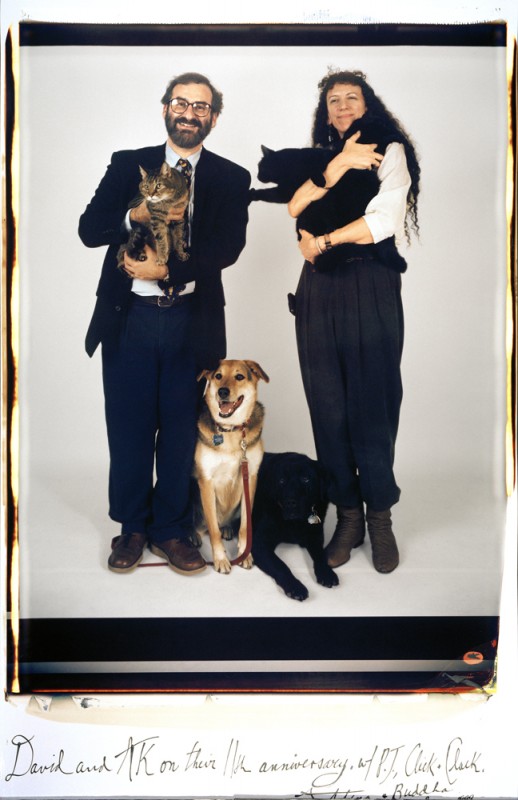
Jack Butler: 20×24 Polaroid Photographs, Uncovering Hidden Social Issues
From the 20×24 Archives, Jack Butler’s provocative exhibit from 1991:
My childhood serves as the experience for the emotional and psychological foundation of this work. Each piece is physically made up of four 20 x 24 Polaroid photographs. The images suggest “instant photograph” yet the scale and content deny that fact. Each piece is intended to pose a question, “to what extent have we internalized the rationalizations of false hope and expectations, and with them, the self-victimization that entails” and how does this manifest itself now in our current social existence.
The work has been critically described as “a valuable contribution toward demystifying a social climate in which a “return to family values” has coincided with an unprecedented and unimagined trend toward domestic maladies” and “opening the tightly sealed Tupper-ware world of socially supported physical and psychological violence within the American family”.

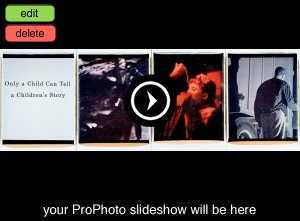
JACK BUTLER
at Fahey/Klein and in With the Media, Against the Media at the Long Beach Museum of Art
These pieces represent a sustained attack on what Foucault has called “the government of individualization,” that is to say, those social practices that impose a determination on the individual and tie him or her to a constraining identity. In juxtaposing images and text, Butler draws out the operations of “disciplinary technologies” within the workshop of the home, in the production of the “docile body” (in both genders, as he points out, and with special emphasis on childhood and adolescent development) concurrently with the “productive body” (both sexually as well as materially). The texts are imbued with a contemporary banality (The Mind of a Failed Father ) and must be read not as illustrative of the images, but as equally symptomatic of the strategies of, rationalization in relation to excesses of power. Overall, Butler’s work makes a valuable contribution toward demystifying a social climate in which a “return to family values” has coincided with an unprecedented and unimagined trend toward domestic violence and homicide.
—G. Daniel VenecianoYou can see more of Jack’s work at Jack Butler’s Art.