Analog Instant in a Digital World
When the instant 20×24 format was created in 1976, it was a different world in photography. Fine art photography was still dominated by black and white, even though color was beginning to gain acceptance. Print sizes rarely exceeded 16×20 inches with 11×14 more the norm. Along comes this gargantuan machine containing its own processor that delivered 20×24 inch Polacolor images in 75 seconds. The quality was astounding, as the negative was the same size as the final print and there was no optical enlargement. There was lushness to the somewhat limited color palette and the diffusion transfer process rendered skin tones like Renaissance glaze painting. It was truly a remarkable process.
Fast forward thirty-five plus years and the photographic landscape has radically changed. Digital technologies grew in quality at a pace no one predicted and analog film lost favor first with the consumer market and eventually the professional market. The fine art market still holds on with established and even young artists embracing the attributes of analog. Contemporary professional DSLR cameras are capable of capturing a dynamic range that rivals medium and large format analog systems. Advances in the Camera Raw format and sophisticated image editors such as Lightroom and Aperture allow the photographer advantages in processing only the finest analog practitioners could achieve.
Still, the 20×24 instant format endures and is revered for all of its original attributes. It is also revered because it is not digital. All large format photography separates itself from digital in many ways; the size of the camera often means it is on a stationary tripod. Viewing the image is completely different, as one must view the image upside down on a ground glass and compose by shifting, rising, swinging and tilting the lens and film standards. As the composition is finalized, the lens is closed and a film holder inserted to take a singular image. A digital photographer could take a hundred different variations of the image while the large format photographer makes one. It is that discipline that separates these two photographic methodologies.
The 20×24 falls into its own category. Because of the size and complexity of the camera itself and the attending lighting system, it is run by a crew of at least two, with the photographer taking the role of director. It is a collaborative process, in some ways similar to film making but also to print making, as the final result will exit the camera in a matter of minutes. There is no post processing; all decisions of exposure, filtration, and processing time are decided on the spot. As the image is peeled and placed on the wall for viewing, everyone involved from the subject, photographer and crew is obviously aware of what has been achieved. While digital setups can show the image immediately on a large high-resolution monitor, it is not the same experience as experiencing the final print. The digital photographer will continue to shoot, perhaps long after they have achieved the best image, because it is simply easy to do so. With 20×24, because of its expense and deliberate approach, the photographer will recognize the best image, often with the input of their subject. While many photographers prefer this large format analog print as the end product, digital technology now allows for scanning to create stunning enlargements or editions from the analog original. This allows artists to expand their markets in ways that painters did in the 19th Century as printmaking became very popular.
Why not fake it, you might ask? A highly skilled digital artist could take a high-resolution digital capture from an 80mp digital back and try to simulate the optical characteristics of large format lenses, they could ramp back the color to simulate the more limited palette of color instant films, they could scan the unique edge marks that 20×24 cameras produce, they could hope to but never achieve the depth of a diffusion transfer print. They could do all these things, and perhaps fool a great many people. So can art forgers simulate a DaVinci or Picasso, and again one could fool a great many people and even experts for a time. Inevitably it comes down to authenticity and a 20×24 instant photograph is the epitome of authenticity.
It is especially so in 2012, thirty-six years after its invention.
Portraits of a President
Chuck Close has wanted to photograph Barack Obama since he was a candidate in 2008. There were several chances to do that in New York these past few years but schedules seemed to change at the last minute. Finally the opportunity arose to photograph the President in Washington DC at the Jefferson Hotel. Complicating our lives was the fact that we were already booked to work with Bruce Weber for the We Are Family Foundation the night before in New York City. Normally you would want to have the camera in DC the day before, set up and test thoroughly to be ready for the few minutes we would likely have with the President. Instead, we loaded the truck up at 11:00 pm and our trusty driver Robert Pattison parked the truck in Tribeca and left for Washington at 4:00 am. We followed on the train with Chuck that next morning, arriving at the Jefferson at 11:30 a.m. Robert had already brought in the equipment at 10:00 a.m. for the Secret Service security sweep.
We got up into the room around noon and began to unpack our equipment in the 20×20 foot room provided us. A 20×20 foot space is about the bare minimum to pull off a 20×24 shoot. We need distance from the seamless and we also need additional room for Chuck’s motorized wheel chair to fit behind the camera. Fortunately, we also had another room across the hall where we could put any non-essential equipment out of the way. We set up and tested for two hours before we asked Chuck to come up for further testing. The President arrived exactly on time at 4:00 pm. He was gracious, friendly and quite curious about our large camera with the red bellows. He was a dream to work with, hitting his mark every time, never moving while we focused and generously gave us forty five minutes to get our images, six in color and three in black and white.
The end product here will be digital watercolors from the select color image and a large-scale tapestry from the black and white image. David Adamson of Adamson Editions in Washington DC will print the watercolor editions and Donald Farnsworth of Magnolia Editions in Oakland will create the tapestries. For a closer look at the tapestry process, click here. The day after the shoot we brought the images to David Adamson to be scanned in preparation for the digital watercolors and tapestries. Lyle Ashton Harris, a long time 20×24 artist was in residence at Adamson Editions preparing work for a new show.

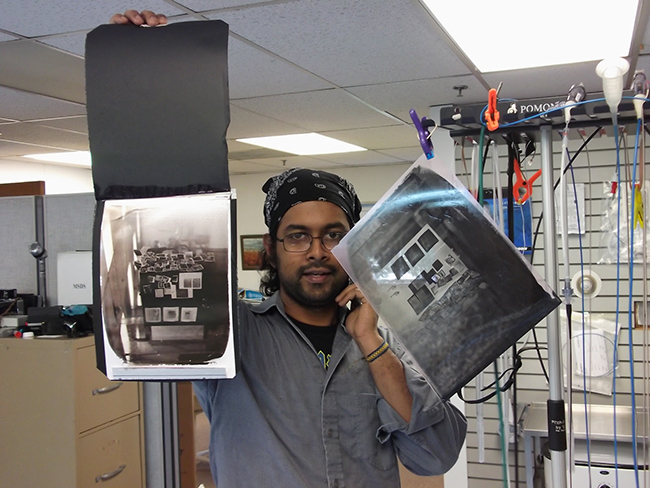
20×24 Studio and New 55 collaborate on prototype instant 8×10 negative
20×24 Studio featured in Mary Ellen Mark interview in NY Times Lens Blog
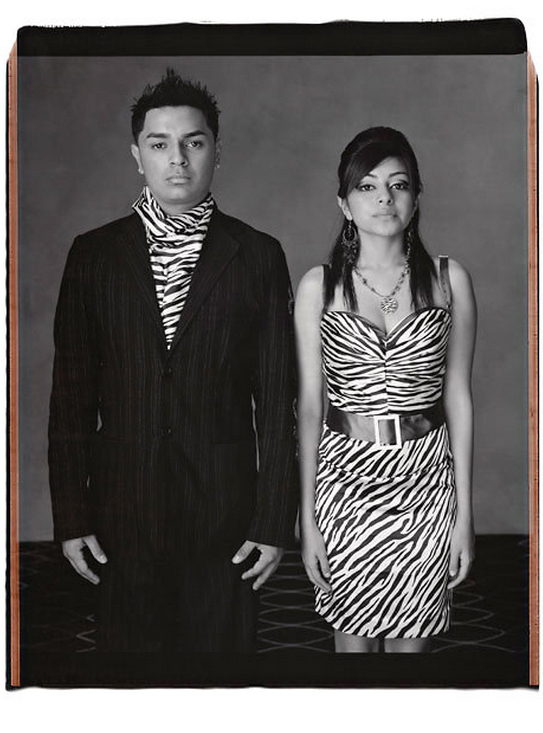
On Friday, March 30, 2012, Lens featured a series of portraits from Mary Ellen Mark’s new book, “Prom,” with a clip from the accompanying film by Martin Bell. The portraits also appeared in the Sunday Review over the weekend. The images were made using the Polaroid 20×24 Land Camera and Polaroid PolaPan 20×24 film. In our conversation last week, we asked Ms. Mark about the camera. Featured here is a selection of additional images she has made using the 20×24.
Read the full story here.
WIRED On Line: Gear Behind the Career: Elsa Dorfman and the Giant Polaroid Camera, by Jakob Schiller
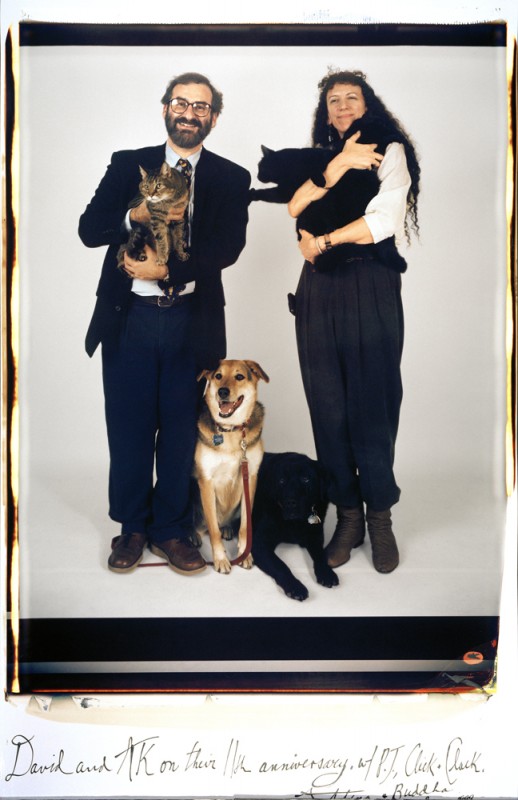
The hulking dinosaur of a camera that photographer Elsa Dorfman has based her career on for over 30 years could soon become extinct. Dorfman, now 74 and living in Cambridge, was first introduced to the 20″x24″ Polaroid in 1980. She had been invited by the company to try one of the 240-pound behemoths that had originally been built in 1976. Simply referred to by the size of the prints it makes, the 20×24 was like a much larger version of the Polaroid cameras most people were familiar with (the camera and Dorfman are pictured above). It only took a few shots to get her hooked.
“From the minute I used it I loved it,” she says.
Read More at Wired OnLine