Category Archives: 20×24 In The News

Jeff Enlow: Parallelograms

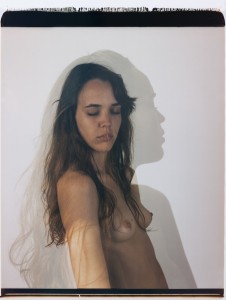
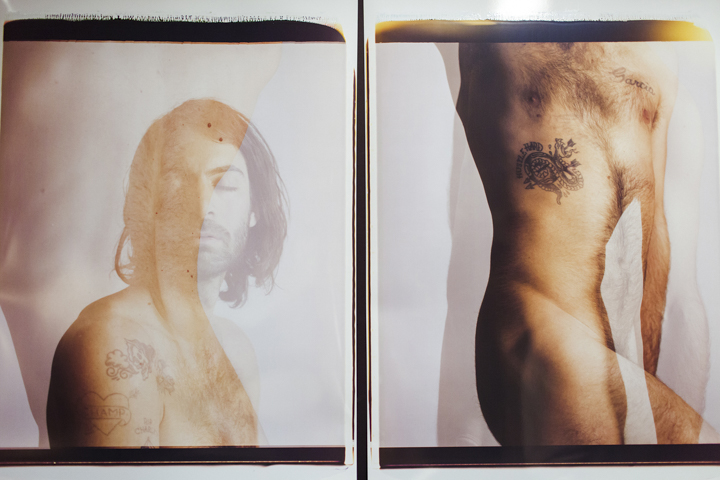
andromeda 7In 2013 artist Jeff Enlow approached the 20×24 Studio with the idea to expand his project “Parallelograms” to the 20×24 format. Jeff had been working for some time in 4×5 format and dreamed of scaling it up to the pinnacle of the large format instant experience. After a half day test session to be sure it would work Jeff embarked on a Kickstarter campaign to fund further shooting sessions. This was the first Kickstarter we know of to underwrite a 20×24 project and the response was enthusiastic. With the Kickstarter proceeds Jeff was able to fund several more sessions, completing his vision for the Parallelograms series with a flourish.
ParallelogramsParallelogramsParallelogramsParallelogramsParallelograms


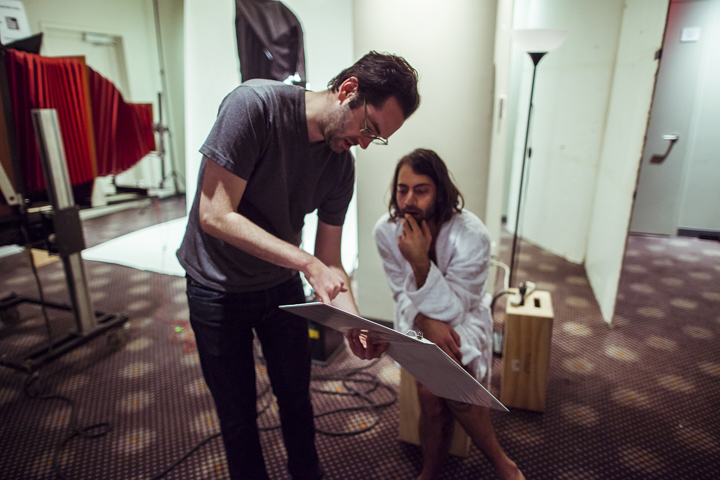
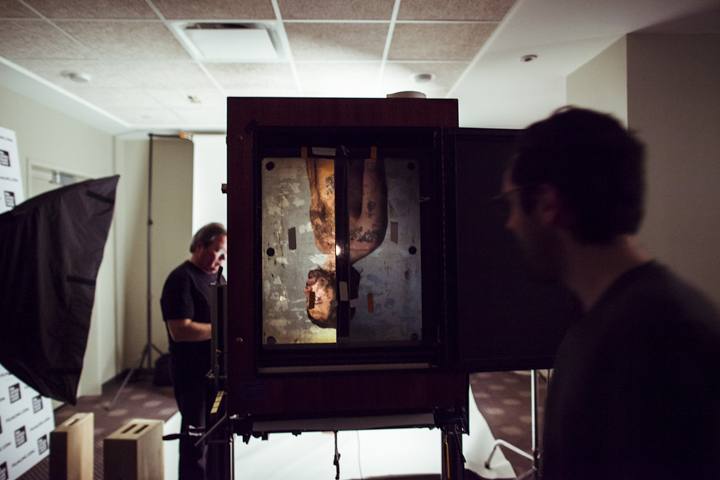
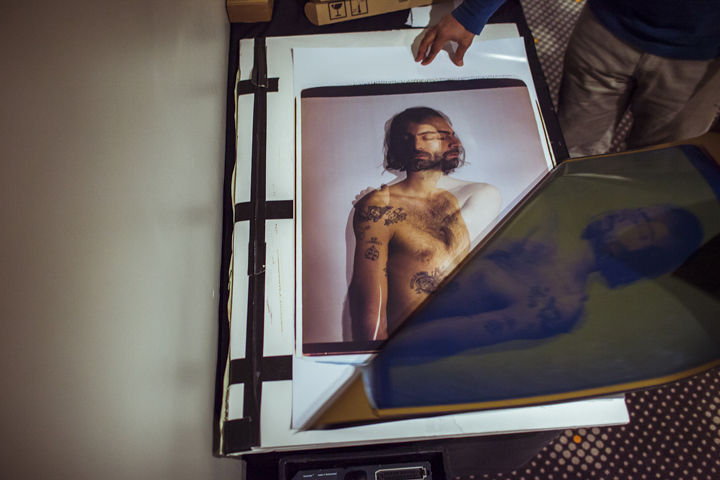
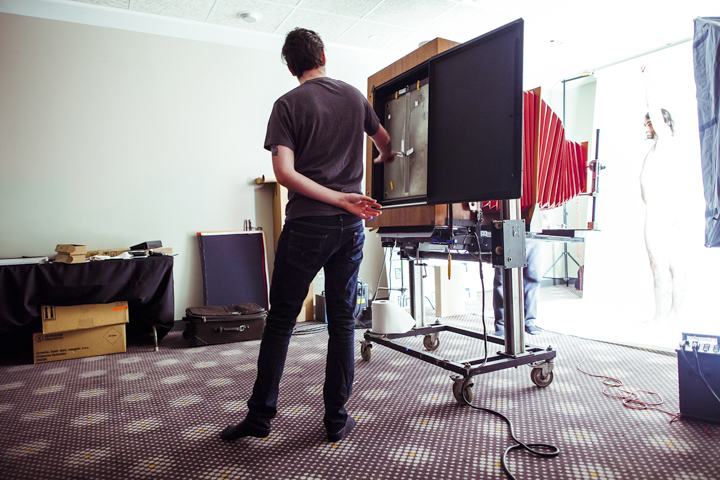
Behind the scenes photos by Bryan Derballa.

Jeff writes of his experiences with the 20×24:

I first discovered the 20×24 as a young student flipping through an American Photo Magazine. There was a small feature on the camera at Sundance. I remember being amazed by the size and weight of the camera. I always loved instant film but this was something else all together. At that time in my life using the 20×24 camera was well beyond my means or skill level. I stored the idea in the back of my mind till I had a project that called for the camera.

When I first conceived of Parallelograms, central to the project was that the images had to feel physical. I wanted to make an image that felt more like making a painting. There is a certain draw to seeing an original one of a kind painting in a museum or gallery that I felt is lacking in photography. Shooting on instant film became the bridge between those two mediums.

Visually, Parallelograms is a study of the topography of the human body. Multiple exposures allow the eye to wander in and out of the intersecting and diverging hills and valleys of the human figure. The unexpected shapes that are revealed in the merging of the two exposures is a wholly new creation—a sacred third entity—that exists in no other plane but on that single instant film sheet.

I start with a general sketch of an image in my head and first shoot it on 4×5 Fuji pack film.  I collaborate with the model and decide the basic structure and flow I am looking for. From there, there are lots of micro adjustments like “drop your chin down, pull this arm back, hide that piece of hair;” I shoot one exposure, then we reset and do it all again. I mark on the ground glass the outline of the first image; so that when we shoot the second image I can try and guide it to flow well.  I can steer the image in the direction I want, but the final print has a gestalt that is beyond omniscience.

There is a bit of translation that happens between shooting on the 4×5 and the 20×24. Using a medium as big as the 20×24 I had to rethink my relationship with both the model and the camera. I couldn’t just show up and reshoot my existing 4×5 images. I have a greater level of flexibility in the smaller 4×5 camera. I can push the camera into different positions and angles that aren’t possible when you are working with a camera a 1000 times larger.

Despite having this massive impedance between the model and myself I was able to achieve an intimacy on the 20x24s that I hadn’t reached before. The intense detail captured transforms the photos into truly rich character studies. It takes a lot of bravery for a model to stand nude in front of the camera. There is little you can hide from a 20×24 Polaroid, every freckle, blemish, and hair is exposed and enlarged.

Using the 20×24 forced me to dramatically slow down. Because of the size and complexity of the camera, along with the rarity and cost of film I only shot 10 – 12 images in a day. This makes little room for error, but also makes for an interesting and nuanced edit of the images. Additional versions of the same image are presented next to one another to highlight the subtle shifts that happen while shooting.

Working with the 20×24 Polaroid creates a craftsmanship to each image that elevates the photo beyond just the culmination of pigments in emulsion. Like brushstrokes on a canvas, subtle details reveal the hidden history of each image. The temperature and humidity in the room, the age of the film and camera, the motion of how the emulsion is pulled—all these elements combine to make a final image that has a visual language and personality unique to itself.

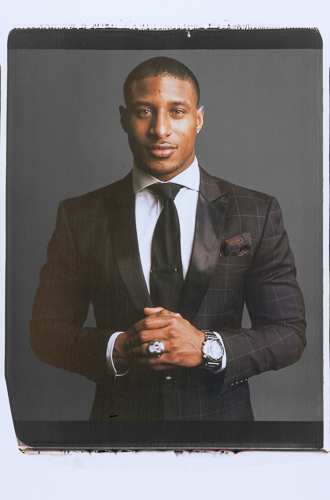
Timothy Greenfield-Sanders photographs Honorees at the We Are Family Foundation Celebration Gala 2.0

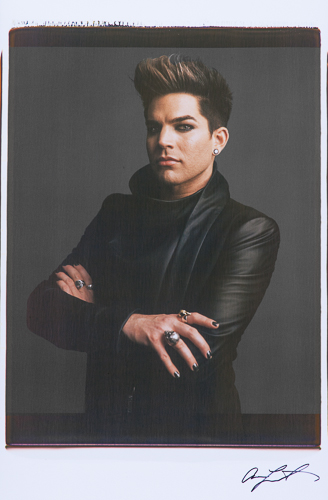
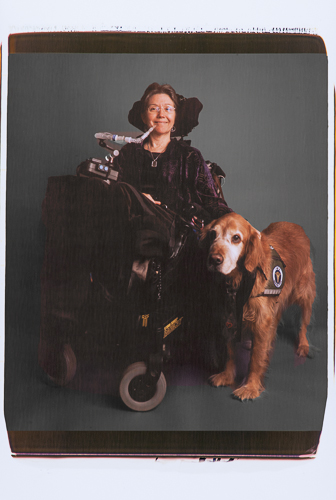
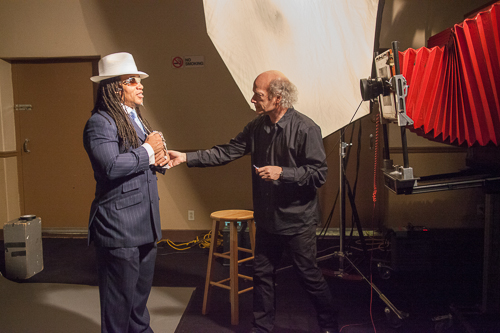
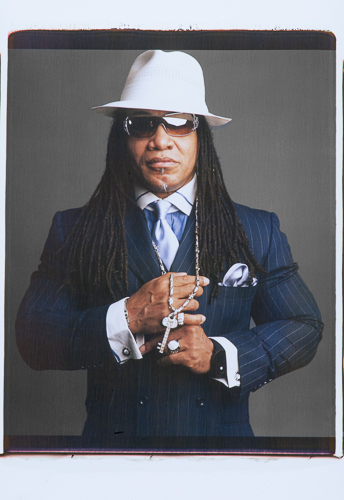
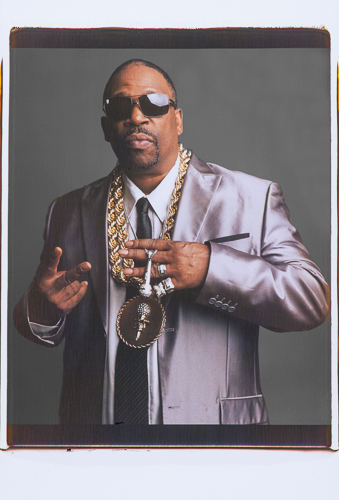
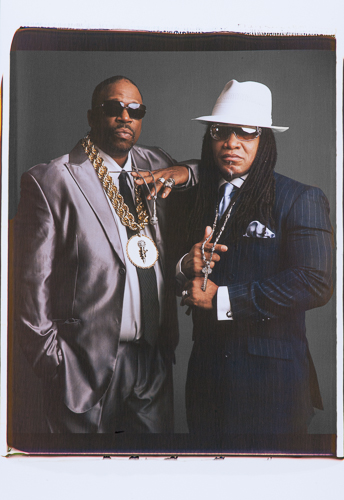
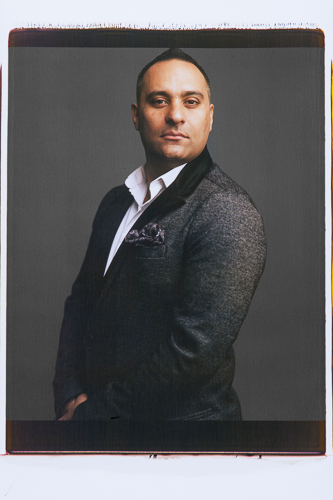
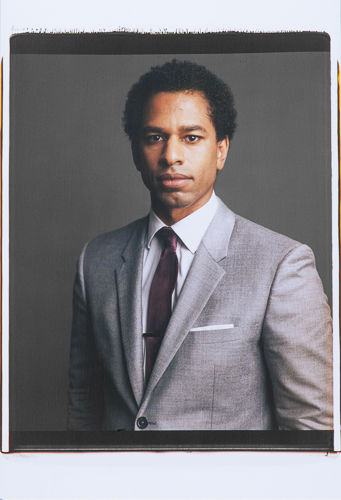
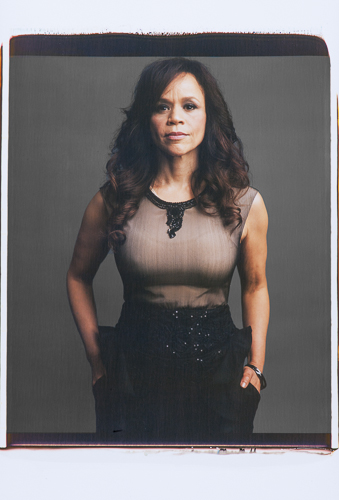
Timothy Greenfield-Sanders has worked with the 20×24 camera since 1986. In those years he used the 20×24 for campaigns for Barney’s, Tommy Hilfiger, on the set Steven Speilberg’s “Hook”, portraits of Presidents and First Ladies, and countless classic images of art world, cinema, and literary celebrities. We were particularly excited to have him agree to photograph at the  We Are Family Foundation Celebration Gala 2.0 held at the Hammerstein Ballroom in New York City on January 31st, 2013. The We Are Family Foundation, founded by Nile Rodgers is a not-for-profit organization dedicated to the vision of a global family by supporting programs that inspire and educate the next generation. Their mission is to celebrate the vision of a global family by creating and supporting programs that inspire and educate people about mutual respect, understanding and appreciation of cultural diversity. The evening was hosted by actress Rosie Perez and Touré, co-host of MSNBC’s “The Cycle,” and included a concert featuring Adam Lambert, Nile Rodgers & CHIC and special guests, Taylor Dayne, Grandmaster Melle Mel, Grandmaster Caz, Kathy Sledge, Sam Sparro, and Russell Peters. Honorees of the Gala were Adam Lambert, the Unity Honoree, Jeni Stepanek , the Mattie J.T. Stepanek Peacemaker Honoree, and Daniel Stern, the Visionary Honoree.
Adam Lambert poses for the 20x24 camera
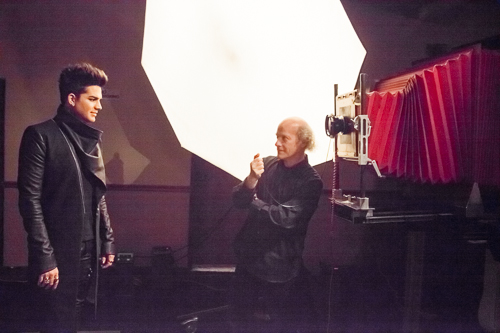
Timothy Greenfield-Sanders poses Adam
Adam Lambert
Adam holds his 20x24 for the photographers
Timothy Greenfield-Sanders and Adam Lambert
Jeni Stepanek
Timothy poses Grandmaster Melle Mel
Grandmaster Melle Mel
Grandmaster Caz
Grandmasters Melle Mel and Caz
Adam Lambert, Nile Rodgers, and Russell Peters
Russell Peters
Touré
Justin Tryon
Rosie Perez

The 20×24 Studio featured on Science Friday.

Polaroid’s 20×24 cameras, built in the late 1970s and named for the dimensions of their snapshots — 20 by 24 inches, are the largest living Polaroid cameras in the world. (There was once an even bigger one with 40×80 snapshots but the film has run out.) Five of these 20×24 cameras still exist, and one resides in New York City’s 20×24 Studio. The Studio’s director, artist John Reuter, demonstrates the 235-pound camera, and Christopher Bonanos, author of Instant: The Story of Polaroid, explains how this camera fits into Polaroid’s history.

Super-Sized Snapshot

Polaroid’s 20×24 cameras, built in the late 70s and named for the dimensions of their snapshots–20 by 24 inches, are the largest living Polaroid cameras in the world. (There was once an even bigger one with 40×80 snapshots but the film has run out.)

Night of Originals with Bruce Weber, Nile Rodgers and the 20×24 Studio

On June 26, 2012, the We Are Family Foundation hosted “Night of Originals” with legendary photographer/filmmaker Bruce Weber and musician/producer and founder of We Are Family Foundation, Nile Rodgers, at the Norwood Club in New York.
An intimate gathering of guests enjoyed a private dinner with Weber and Rodgers that was followed by a black and white portrait sitting with Weber using one of only five 20×24 large format Polaroid© Land cameras in existence and one of the last remaining rolls of large format Polaroid© film – all owned by 20×24 Studio. Each image is a one-of-a-kind – there are no negatives. Weber carefully crafted every image and brilliantly told a story with each one. One of the many highlights of the evening was Valerie Simpson (Ashford & Simpson) and her two daughters, Asia and Nicole, singing “Ain’t No Mountain High Enough” as Weber shot their portrait. This was the first time the family has been photographed together since Nick Ashford’s passing last year. As guests were waiting to have their portraits taken Rodgers performed a one-man show sharing stories about his life, music and the New York underground during the 70s and 80s – as depicted in his critically acclaimed best-selling autobiography, Le Freak: An Upside Down Story of Family, Disco and Destiny.
Proceeds from Night of Originals benefitted the We Are Family Foundation and its signature Three Dot Dash Global Teen Leader program that identifies and mentors teen leaders who are actively promoting peace through their work addressing basic human needs worldwide.

Bruce Weber, born in rural Greensburg, Pennsylvania in 1946, became the preeminent photographer of the fashion industry in the 1980s and continues to be one of the world’s most popular and influential photographers. Weber initially pursued theater at Denison University in Ohio, then turned to filmmaking at New York University. Thanks to Diane Arhus, he was introduced to and studied with Lisette Model at The New School for Social Research in the 1960s. He participated in his first group show at The Floating Foundation of
Photography in 1973 and had his first solo exhibition at Razor Gallery in New York City a year later. In the late 1970s, Weber began photographing ads and commercials for Ralph Lauren and Calvin Klein. His photographs have since appeared in Va n i t y Fair, American Vogue, Interview, Italian Vogue, and GQ, among many others. More than 15 books of Weber’s work have been published. His photographs are in the permanent collections of London’s Victoria and Albert Museum and the Museum of Modern Art in Paris. Weber has exhibited at venues including the 1987 Whitney Biennial in New York City, Musee de l’Elysee in Lausanne, Switzerland, Palazzo Fortuny in Venice, the Florence Biennale, the National Portrait Gallery in London, the Parco Exposure Gallery in Tokyo, Fahey/Klein in Los Angeles, Galeria Corso Como in Milan, and the Russell Senate Building in Washington, DC.
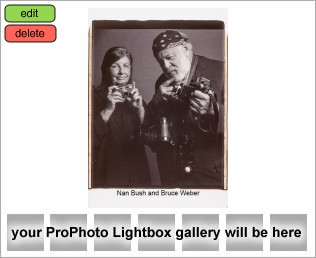
Bruce is a dedicated film shooter so it was extra special to have him work on the 20×24 camera. Analog film cameras were in abundant supply as Buuce and Nan, Dan and Nanna Stern and Bruces’s assistants Mike Murphy and Chris Domurat posed with cameras.